Hanbok Fashion Evolves: Modern Style for 2030s Trend
Beyond being a mere garment, Hanbok is a wearable masterpiece that captures a unique philosophy of balance and aesthetic harmony.
Hanbok is far from a dusty museum relic; it is a living, breathing fashion evolution that adapts to the modern pulse. By blending structural flexibility with a sophisticated color palette, this traditional attire has transformed into a functional "lifestyle" fashion statement.
* Deep Historical Roots: The standardized silhouettes seen today boast over 500 years of documented history, primarily anchored in the Joseon Dynasty. * Geometric Structure: The design relies on a distinct two-part system consisting of a top (*jeogori*) and a bottom (*chima* for women or *baji* for men). * Modern Renaissance: Since the early 2020s, "Lifestyle Hanbok" has surged in popularity, specifically among the 20-to-30-year-old demographic. * Symbolic Language: Every color and pattern serves as a high-level communication tool for social status, marital standing, and seasonal shifts.

Is Hanbok Really Uncomfortable and Hard to Wear?
The most common misconception about Hanbok is that it is "fussy" or "restrictive." However, this usually stems from a lack of understanding of its unique geometry.
The fundamental structure—the *jeogori* top and the voluminous *chima* or *baji*—actually provides a surprising amount of freedom of movement due to its airy fit.
For women, the high waistline is a standout feature. It sits high on the chest, which visually elongates the lower body and uses the skirt's volume to create a graceful, flattering silhouette.
I experienced this firsthand this past June in 2026 while visiting a rental boutique near a historic palace. I was worried about the bulk, but the wide hem of the skirt actually made walking up stone stairs and navigating crowded walkways feel much more effortless than I anticipated.
While traditional versions require precision with ribbon ties, modern iterations are built for ease.
According to the Ministry of Culture, Sports and Tourism's 2025 survey on cultural engagement, the modern adaptation of traditional culture is deeply penetrating the daily lives of younger generations.
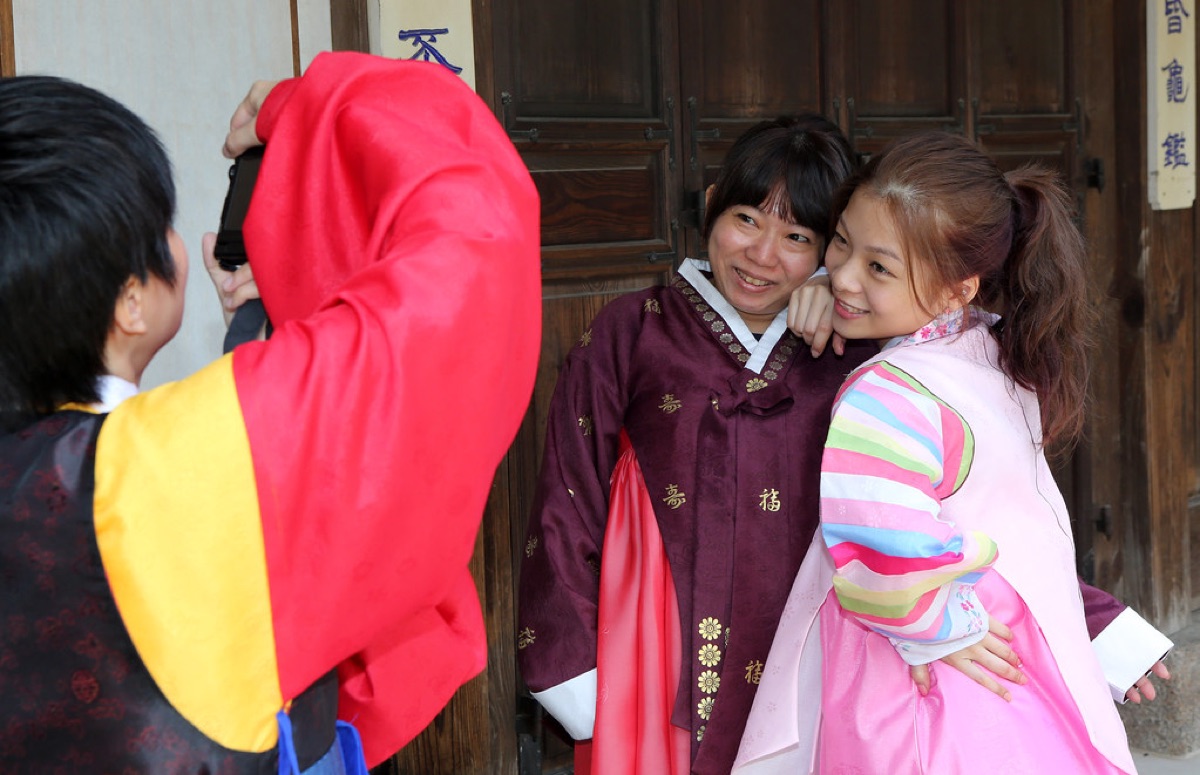
Analyzing the Geometric Aesthetic of Hanbok
The beauty of Hanbok doesn't just come from bright colors; it emerges from the harmony of precise structural elements. According to the National Museum of Korea's 2023 artifact analysis, the standard Hanbok silhouette has been refined through over 500 years of recorded history.
To truly appreciate the craftsmanship, you should look for these three key design elements:
- The *Git* (Collar): This part wraps around the neck and sets the entire visual tone of the garment. 2. The *Dongjeong* (White Collar Strip): A detachable white strip placed over the *git* to ensure a crisp, clean appearance that is easy to launder. 3. The *Goreum* (Ribbon Ties): These ribbon-like ties fasten the top and are essential for completing the garment's three-dimensional silhouette.
These elements create a unique "flow." Even when using stiffer fabrics, the way the garment drapes against the body creates a natural, organic curve that is exclusive to Hanbok.
What Do the Colors and Patterns Actually Mean?
In the past, color was much more than a personal preference; it was a social indicator. The National Museum of Korea's 2023 report highlights that colors functioned as a sophisticated symbolic system representing social rank, marital status, and the changing seasons.
For instance, specific vibrant hues were reserved for royalty, while other tones signaled a woman's transition into marriage.
Furthermore, the use of natural pigments—derived from plants, minerals, or insects—meant that the colors often reflected the natural world, emphasizing harmony with the environment.
| Feature | Traditional Hanbok | Modern Lifestyle Hanbok |
|---|---|---|
| Primary Materials | Silk, ramie, hemp (natural) | Cotton, linen, synthetic blends |
| Primary Purpose | Ceremonies, holidays, formal rites | Daily wear, office, casual outings |
| Silhouette | Voluminous and static elegance | Slimmer, casual, and mobile fit |
| Maintenance | Requires professional care | Machine washable/Easy care |
The Future of Hanbok: Blurring Tradition and Trend
Today, Hanbok is evolving from "museum art" into "global fashion." As K-Culture continues to dominate the global stage, Hanbok is proving its potential as a high-fashion item worldwide.
The Ministry of Culture, Sports and Tourism's 2025 statistics show a significant upward trend in "Lifestyle Hanbok" popularity among those in their 20s and 30s over the last decade.
Modern designers are keeping the iconic lines and colors but playing with fabric weight and length to suit a modern lifestyle.
However, this rapid evolution does come with debates. Some purists worry that the deep symbolic meanings or traditional construction methods might be lost in the pursuit of convenience.
Striking a balance between historical integrity and modern accessibility remains the central challenge for the industry.



Comments 0